
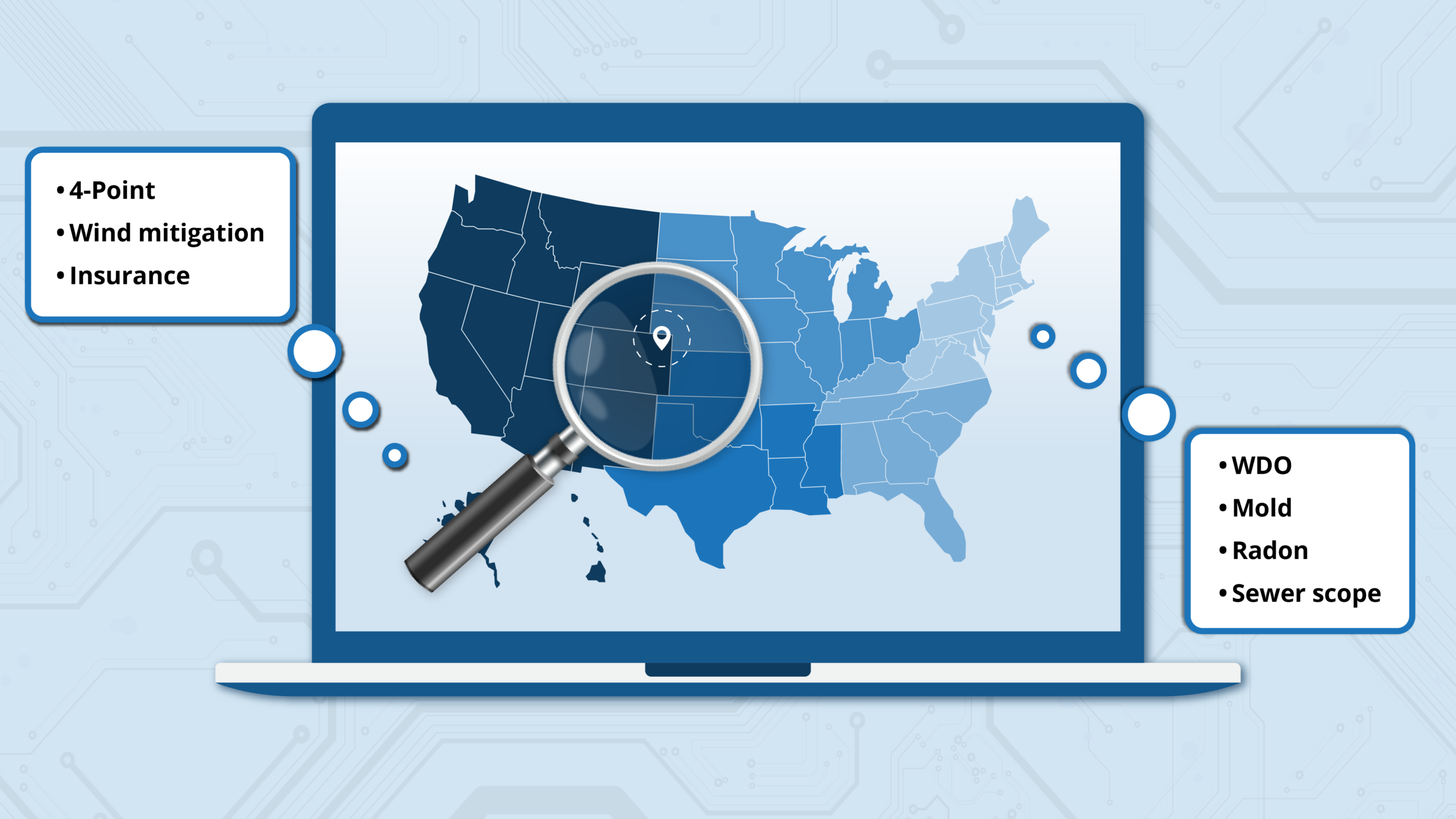
Inspection tools for home inspectors aren’t one-size-fits-all, and your region is the reason. Licensing rules change by state. Inspection add-ons change by geography. Even what clients, agents, and insurers expect to see in report writing can vary depending on where you work.
That’s why choosing inspection tools for home inspectors based on a feature list alone usually backfires. What works fine in one market can turn into extra steps, manual fixes, or awkward gaps in another. And those problems don’t show up in a demo. They show mid–inspection, mid-report, or when a form doesn’t line up with local requirements.
The right inspection tools for home inspectors adapt to regional rules, inspection types, and how you run your business. This post breaks down how geography affects your workflow and what to look for in software that’s built to keep up.
Why inspection rules change depending on where you work
Let’s start with the regulatory reality: home inspection requirements in the U.S. are not uniform. Some states regulate and license inspectors. Others don’t. In fact, there are 14 states that do not require a license to perform home inspections.
Meanwhile, many regulated states rely on a shared baseline exam. The National Home Inspector Examination (NHIE), for example, is used in 35 states for home inspection licensing.
Why this matters for software
If you operate near a border, do seasonal work, or expand into a neighboring state, inspection tools for home inspectors need to handle these differences fast. That’s why a “good enough” setup in one region can feel like a mess in another.
Rigid inspection report templates don’t hold up across varying compliance expectations. Software has to flex with how and where you inspect, or it becomes a limitation instead of a support system.
Report writing expectations aren’t universal – and software has to keep up
Report writing is where regional differences start showing up like a neon sign and affecting your day-to-day workflow. Some states and professional associations require or strongly encourage specific language, disclosures, or inspection scopes, which means your reports can’t be generic if you want to stay compliant.
Inspectors offering add-ons like radon, WDO, sewer scopes, or mold often need separate sections and narratives that vary by region. What’s considered standard language in one market may be incomplete, or misleading, in another, especially when insurance or real estate transactions are involved.
That’s why flexible report writing software matters more than polished frameworks when you’re choosing inspection tools for home inspectors. ISN breaks down how to write a better home inspection report by showing how structure, narrative control, and clear disclosures support regional requirements without slowing inspectors down.
If you want to see how the right tools support those report writing demands, read what can software for home inspection reports do, which walks you through how modern platforms handle structure, narratives, images, and disclosures without forcing workarounds.
But if it’s time to step back and evaluate your home inspection software as a whole, check out The Ultimate Guide to Home Inspection Software – it’s our most relevant reference for understanding how adaptable tools reduce cleanup work when requirements change.
Geography influences what inspections you perform
Here’s the part that becomes obvious once you’re in the field: where you inspect drives what you inspect, and how you document it.
In coastal regions, moisture intrusion, wind mitigation, and insurance-driven inspections are common. That’s why inspectors in those markets often rely on structured forms and dedicated report sections. ISN supports that reality with resources like its Florida wind mitigation template, Citizens 4-point inspection template and NPMA-33 pest inspection template.
Move inland, and the picture changes. In much of the Midwest, older housing inventory means more focus on structural components and foundation concerns. Head southwest, and roof performance, HVAC systems, and heat-related issues take center stage.
All of that directly affects software choice. Inspection tools for home inspectors must support region-specific services, pricing, and report sections without forcing you to rebuild your existing setup every time you add a new inspection type. The right setup adapts as your offerings change, so your tools keep pace with your business instead of slowing it down.
Scheduling, agreements, and payments change by market
Regional differences don’t stop at the inspection itself. They show up in how inspections get booked, how agreements are handled, and when payment is expected.
In some states, inspection agreements must be signed before the inspection begins. Other markets normalize deposits or prepayment. If your system can’t handle those differences cleanly, you end up chasing signatures and payments when you should be focused on inspections. And inspection tools for home inspectors should support region-appropriate scheduling, agreements, and payment workflows. What works in one state may fall apart in another, especially for inspectors expanding into neighboring areas.
ISN supports these workflows with tools that let inspectors require an agreement signature before payment and walk clients through how to sign an inspection agreement and pay online so the process matches local expectations without extra back-and-forth.
What to look for in inspection tools for home inspectors in your region
When you’re comparing inspection software platforms, don’t start with the feature list. Start with the regional friction points you already deal with, then work backward into software requirements.
Here’s what matters most:
- Customizable templates and narratives by state or service so regional rules don’t force generic language
- Support for multiple inspection types without duplication when adding radon, WDO, or sewer scopes
- Workflow changes that don’t break existing reports when requirements shift
- A platform that scales into new regions without requiring a reset
ISN breaks these decision points down clearly in what to look for in the best home inspection software.
Choose tools that keep up with your business
Regional requirements aren’t static, and neither is your business. One year you’re adding services. The next, you’re crossing state lines or tweaking how you present findings. That’s why fit matters more than feature lists. A long checklist of buttons, toggles, and options that don’t fit your region won’t help when your market changes.
Short-term convenience can be tempting, especially when you’re busy. But tools built around rigid setups tend to crack the moment expectations change. Tools that keep up pay off long-term, because good home inspection software is more than a report writer.
Inspection tools for home inspectors should make growth feel like an upgrade, not a teardown. If you want software that works for your market today and still makes sense as your business expands, start a free ISN trial today.